

There is a version of this story you have probably heard before.
Parent gets diagnosis. Parent pours everything into child. Parent looks up one day and realizes they have no idea who they are anymore. Parent is encouraged to take a bath, call a friend, schedule a massage.
That is not the story I want to tell you.
Because losing yourself as a special needs parent is real. But the version of yourself you lost -- the one the world is telling you to go back and find -- may not be the one that was ever truly yours to begin with.
Before the Diagnosis, Who Were You?
I want you to sit with that question for a moment before you answer.
Not your job title. Not your relationship status. Not the one that is 20 lbs overweight. Not the things you used to enjoy before the appointments swallowed your calendar. I mean the deeper version of the question.
Before the diagnosis, were you free? Were you at peace? Were you unlimited? Were you living from a place of genuine wholeness -- or were you, like most people, quietly running a program that said: get the right pieces in place, and if the outside world looks ok, then it must mean i’ll be ok?
Most of us, if we are ruthlessly honest, were already a little lost before the diagnosis arrived. We had just built enough structure around the lostness that we didn’t have to feel it directly.
We had the identity -- the career, the relationship, the version of family we were building. We had the forward momentum according to society. And underneath all of it, something quieter: a self that had been shaped almost entirely by what life had taught us we needed to be in order to be loved, to be safe, to be okay.
That self was not really ours. It was assembled. Built from the outside in, from childhood forward, by every message we absorbed from parents, media outlets & our peers. We had become a product of our environment. As is often said, we were similar to the 5 people we spent the most time with. Was that our REAL self?
The self you lost to caregiving was, in many ways, already borrowed. What becomes possible now is finding the one that was always actually yours.
The Collapse of the Assembled Self
When the diagnosis came, that assembled self began to fall apart.
The future you had been building -- the one where your identity as a parent looked a certain way, where your family moved through the world with a certain kind of ease -- dissolved. The roles that had been holding you together stopped fitting. The story you had been living inside stopped making sense.
And into that collapse poured everything you had been outrunning.
The exhaustion was not just physical. It was the exhaustion of maintaining a self that was never fully real. The grief was not just about your child’s diagnosis. It was the grief of a constructed identity meeting its limits and finally breaking open.
This is the part no one talks about. Because it is far easier to say ‘you lost yourself to caregiving’ than to ask what self you actually had before.
What Identity Actually Is
Here is something worth sitting with: most of what we call our identity -- our personality, our preferences, our fears, our sense of what we deserve and what we’re capable of -- is not really ours. It is a collection of programs written in childhood, reinforced by experience, and mistaken for truth.
We learn early what we must be in order to be loved. We learn what is safe and what is dangerous. We learn what kind of person we are and what kind of life people like us get to have. And then we spend the rest of our lives proving those programs right -- not because they’re true, but because the mind is extraordinarily good at finding evidence for what it already believes.
Today’s neuroscience is proving all of this. Since the brain is designed to predict and protect, then it starts to make sense.
The special needs diagnosis does something radical to all of that. It takes the assembled self and puts it under impossible pressure. The old programs stop working. The old strategies fail. The performance becomes unsustainable.
And then something remarkable becomes available -- if we are willing to look at it.
Beneath everything you were taught to be, there is something that was never conditioned. Never damaged. Never defined by a diagnosis or a role or someone else’s idea of what your life should look like. That is the self worth finding.
The Identity That Was Always There
What I am pointing to is not a new self you need to build. It is not a list of hobbies to reclaim or interests to rediscover or boundaries to enforce.
It is the awareness that was present before you had a name. Before you had a role. Before you had a diagnosis, a child, a marriage, a career. Before any of the conditions were placed on who you had to be in order to belong.
That presence has never left. It cannot leave. It was simply covered over by so many layers of programming, so many stories about who you were and what your life was supposed to look like, that it became difficult to find.
The diagnosis -- for all its devastation -- has a way of stripping those layers back. The constructed self breaks down. The old story stops holding. And in the silence that follows, something older and quieter becomes audible.
Not a version of you that existed before the diagnosis. A version of you that existed before all of it.
A Different Question to Carry
Most of the conversation around special needs parenting and identity asks: how do I get back to who I was?
This work asks something different: who were you before you learned who you were supposed to be?
That question is not meant to be answered quickly. It is meant to be lived with. Turned over. Allowed to do its quiet work underneath the surface of ordinary days.
Because the parent who discovers the answer -- not as a concept but as a direct, lived recognition -- does not need to go back and find a lost self. They step into something that has been available and waiting the entire time.
Something that does not need the diagnosis to be different. Does not need the child to be different. Does not need anything outside of itself to be okay.
That is not the end of the journey. It is the beginning of a completely different one.
CALL TO ACTION
I want to ask you something and I genuinely want to hear your answer: who were you before you learned who you were supposed to be? Not the resume version. The real one.
Leave it in the comments, or if this landed somewhere true, share it with another parent who needs to read it. And if you haven’t subscribed yet, join me here each week. This is only the beginning.

You've heard the oxygen mask thing a thousand times.
Put yours on first. Take care of yourself so you can take care of them. Self-care isn't selfish. All of it.
And every time someone says it, you nod. You agree. You know it's true.
And then you go home and you do exactly what you were doing before — which is running yourself into the ground trying to fix your child so that YOU can finally be okay.
Get them to talk.
Get them to walk.
Get them into the normal classroom.
Get them to make friends.
Get them to hit the milestones.
Because somewhere deep down, you believe that if you can just fix THEM — if you can just make them more "normal," more capable, more like the other kids —
Then you'll be able to relax.
Then you'll be able to breathe.
Then you'll be able to be happy.
Then you'll be okay.
I'm going to tell you something that might be hard to hear:
”That's backwards.”
And until you see that it's backwards, you're going to spend your entire life chasing something that will never make you okay.
---
Here's the pattern we've all been taught:
Something in the outside world is wrong.
Maybe it's your job. Your finances. Your relationship. Your child's development.
And you believe — deeply, unconsciously — that if you can just FIX that external thing, THEN you'll be happy.
"When I get the promotion, then I'll feel secure."
"When I lose the weight, then I'll feel confident."
"When my child starts talking, then I'll be able to relax."
This is the oldest lie in human existence.
And it's a lie because it gets the order of operations completely wrong.
You think:
”Fix the outside → Feel okay on the inside”
But the actual truth is:
”Become okay on the inside → Experience the outside world differently”
Your child's development is not the obstacle to your peace.
Your belief that you can't be okay until they develop is the obstacle.
---
Let me say that again because it's the most important thing I'll write in this entire piece:
”Your child is not the problem. Your attachment to them being different than they are is the problem.”
And I don't mean that in a toxic positivity, "just accept everything and be grateful" kind of way.
I mean it in a very literal, very practical way.
Right now, in this moment, your child is exactly who they are.
They have the abilities they have.
They have the challenges they have.
They are developing at the pace they're developing.
That is the REALITY.
And reality is not the problem.
Reality just IS.
The problem — the suffering, the stress, the exhaustion, the despair — comes from the GAP between reality and what you think reality SHOULD be.
That gap is where you live.
And it's killing you. Its causing dis-ease which is the precurser to disease.
---
Here's what's actually happening:
Every time you look at your child and think "They should be talking by now"…
Every time you see another kid their age doing something yours can't…
Every time you sit in an IEP meeting and feel the weight of how far behind they are…
Put yours on first. Take care of yourself so you can take care of them. Self-care isn't selfish. All of it.
And every time someone says it, you nod. You agree. You know it's true.
And then you go home and you do exactly what you were doing before — which is running yourself into the ground trying to fix your child so that YOU can finally be okay.
Get them to talk.
Get them to walk.
Get them into the normal classroom.
Get them to make friends.
Get them to hit the milestones.
Because somewhere deep down, you believe that if you can just fix THEM — if you can just make them more "normal," more capable, more like the other kids —
Then you'll be able to relax.
Then you'll be able to breathe.
Then you'll be able to be happy.
Then you'll be okay.
I'm going to tell you something that might be hard to hear:
”That's backwards.”
And until you see that it's backwards, you're going to spend your entire life chasing something that will never make you okay.
---
Here's the pattern we've all been taught:
Something in the outside world is wrong.
Maybe it's your job. Your finances. Your relationship. Your child's development.
And you believe — deeply, unconsciously — that if you can just FIX that external thing, THEN you'll be happy.
"When I get the promotion, then I'll feel secure."
"When I lose the weight, then I'll feel confident."
"When my child starts talking, then I'll be able to relax."
This is the oldest lie in human existence.
And it's a lie because it gets the order of operations completely wrong.
You think:
”Fix the outside → Feel okay on the inside”
But the actual truth is:
”Become okay on the inside → Experience the outside world differently”
Your child's development is not the obstacle to your peace.
Your belief that you can't be okay until they develop is the obstacle.
---
Let me say that again because it's the most important thing I'll write in this entire piece:
”Your child is not the problem. Your attachment to them being different than they are is the problem.”
And I don't mean that in a toxic positivity, "just accept everything and be grateful" kind of way.
I mean it in a very literal, very practical way.
Right now, in this moment, your child is exactly who they are.
They have the abilities they have.
They have the challenges they have.
They are developing at the pace they're developing.
That is the REALITY.
And reality is not the problem.
Reality just IS.
The problem — the suffering, the stress, the exhaustion, the despair — comes from the GAP between reality and what you think reality SHOULD be.
That gap is where you live.
And it's killing you. Its causing dis-ease which is the precurser to disease.
---
Here's what's actually happening:
Every time you look at your child and think "They should be talking by now"…
Every time you see another kid their age doing something yours can't…
Every time you sit in an IEP meeting and feel the weight of how far behind they are…
Every time you handle a meltdown in the grocery store and are embarrased……
You're not experiencing your child.
You're experiencing the DISTANCE between your child and the child you expected to have.
And that distance — that gap between expectation and reality — is where all your suffering lives.
Not in your child.
Not in their disability.
Not in their delays.
In the gap.
In the story you're telling about what it means that they're not where you thought they'd be.
---
And here's the truly insidious part:
You think if you can just close that gap — if you can just get your child closer to "normal" — then the suffering will stop.
So you throw everything you have at it.
More therapy.
More interventions.
More specialists.
More research.
More advocacy.
More effort.
More sacrifice.
And maybe some of it helps. Maybe your child makes progress.
But even when they do — even when they hit a milestone you've been working toward for months or years —
The relief doesn't last.
Because the gap doesn't close.
It just moves.
Now it's a different milestone. A different delay. A different comparison.
The goalpost shifts, and you're right back in the gap, suffering the distance between what is and what you think should be.
Do you see what's happening?
”You're trying to fix your child so that YOU can be okay.”
And that will never, ever work.
Because your okayness is not dependent on your child.
It's dependent on YOU.
You're not experiencing your child.
You're experiencing the DISTANCE between your child and the child you expected to have.
And that distance — that gap between expectation and reality — is where all your suffering lives.
Not in your child.
Not in their disability.
Not in their delays.
In the gap.
In the story you're telling about what it means that they're not where you thought they'd be.
---
And here's the truly insidious part:
You think if you can just close that gap — if you can just get your child closer to "normal" — then the suffering will stop.
So you throw everything you have at it.
More therapy.
More interventions.
More specialists.
More research.
More advocacy.
More effort.
More sacrifice.
And maybe some of it helps. Maybe your child makes progress.
But even when they do — even when they hit a milestone you've been working toward for months or years —
The relief doesn't last.
Because the gap doesn't close.
It just moves.
Now it's a different milestone. A different delay. A different comparison.
The goalpost shifts, and you're right back in the gap, suffering the distance between what is and what you think should be.
Do you see what's happening?
”You're trying to fix your child so that YOU can be okay.”
And that will never, ever work.
Because your okayness is not dependent on your child.
It's dependent on YOU.

---
This is what RoccoBlu is all about.
We are not here to teach you how to fix your child.
We are here to teach you how to fix yourself.
And by "fix," I don't mean that you're broken.
I mean: **How do you become a person who is genuinely okay — thriving, even — regardless of what your child does or doesn't do?**
Because here's the truth:
When YOU are okay, your child gets to just BE.
They don't have to carry the weight of your expectations.
They don't have to perform development to earn your peace.
They don't have to be anyone other than exactly who they are in this moment for you to experience joy, presence, and love.
And when you can give them that — when you can show up fully present, fully okay, fully alive, no matter what they're doing or not doing —
THAT is the greatest gift you will ever give them.
Not more therapy.
Not more intervention.
Not getting them into the normal classroom.
You. Thriving. Regardless.
---
Let me tell you what I mean by thriving.
I don't mean you're happy all the time.
I don't mean you're never sad, never frustrated, never exhausted.
I don't mean you've transcended into some Zen state where nothing bothers you.
Thriving means you've stopped making your okayness conditional on things you can't control.
Thriving means you've learned to separate the PAIN of the situation from the SUFFERING you were adding to it.
Pain is real. Your child's disability is real. The difficulty is real. The exhaustion is real.
But the suffering — the story about what it all MEANS, the belief that you can't be okay until it's different, the gap between expectation and reality —
That's optional.
And closing that gap is the work.
Not by changing your child.
By changing YOU.
In his book, Mans Search for Meaning (i highly recommend you read this book), Victor frankel says, “Between stimulus and response there is a space. In that space is our power to choose our response. In our response lies our growth and our freedom."
---
Here's the shift:
Right now, you're standing in the middle of your life, comparing it to some other life you think you were supposed to have.
Comparing your child to other kids.
Comparing your experience to other parents.
Comparing your reality to the version you see on social media, in the workplace, in the world.
And every time you compare, you lose.
Because comparison is a wheel of doom.
There will ALWAYS be someone whose child is further ahead.
There will ALWAYS be someone who seems to have it easier.
There will ALWAYS be a gap between where you are and where someone else is.
And as long as you're on that wheel — as long as your okayness depends on being somewhere other than where you are —
You will never be okay.
No matter how much progress your child makes.
No matter how much you achieve.
No matter how much you fix.
The wheel just keeps turning.
---
But here's what happens when you step off the wheel:
You stop comparing.
You stop measuring your child against milestones.
You stop measuring yourself against other parents.
You stop measuring your life against some imaginary version that was "supposed" to happen.
And you just… look.
Not through the lens of "should."
Not through the lens of "not enough."
Just… look.
At your child. At your life. At this moment.
And when you do that — when you drop the expectation, the comparison, the gap —
Something extraordinary happens.
You start to see what's actually here.
Not what's missing.
What's HERE.
---
We were given awareness.
That's the miracle.
Out of all the matter in the universe, some of it became conscious. Some of it became aware that it exists.
That's us.
We get to experience this.
But here's the thing:
In the grand scheme of existence — in the vastness of the universe, the billions of years that came before us, the incomprehensible scale of reality —
Our awareness is so small.
We are perceiving such a tiny, narrow slice of what actually is.
And yet we take that tiny slice SO seriously.
We think our opinions about it matter.
We think our preferences about how it should be are important.
We think we know how things are supposed to go.
But we don't.
We're like someone standing in the middle of the ocean with a glass of water, convinced that the water in the glass is all there is.
That's how small our awareness is compared to the whole.
And when you really see that — when you really understand how little you're actually perceiving —
You stop taking it all so seriously.
You stop clinging so tightly to your version of how things should be.
You stop demanding that reality match your expectations.
And instead, you just… marvel.
---
Here's the shift:
Right now, you're standing in the middle of your life, comparing it to some other life you think you were supposed to have.
Comparing your child to other kids.
Comparing your experience to other parents.
Comparing your reality to the version you see on social media, in the workplace, in the world.
And every time you compare, you lose.
Because comparison is a wheel of doom.
There will ALWAYS be someone whose child is further ahead.
There will ALWAYS be someone who seems to have it easier.
There will ALWAYS be a gap between where you are and where someone else is.
And as long as you're on that wheel — as long as your okayness depends on being somewhere other than where you are —
You will never be okay.
No matter how much progress your child makes.
No matter how much you achieve.
No matter how much you fix.
The wheel just keeps turning.
---
But here's what happens when you step off the wheel:
You stop comparing.
You stop measuring your child against milestones.
You stop measuring yourself against other parents.
You stop measuring your life against some imaginary version that was "supposed" to happen.
And you just… look.
Not through the lens of "should."
Not through the lens of "not enough."
Just… look.
At your child. At your life. At this moment.
And when you do that — when you drop the expectation, the comparison, the gap —
Something extraordinary happens.
You start to see what's actually here.
Not what's missing.
What's HERE.
---
We were given awareness.
That's the miracle.
Out of all the matter in the universe, some of it became conscious. Some of it became aware that it exists.
That's us.
We get to experience this.
But here's the thing:
In the grand scheme of existence — in the vastness of the universe, the billions of years that came before us, the incomprehensible scale of reality —
Our awareness is so small.
We are perceiving such a tiny, narrow slice of what actually is.
And yet we take that tiny slice SO seriously.
We think our opinions about it matter.
We think our preferences about how it should be are important.
We think we know how things are supposed to go.
But we don't.
We're like someone standing in the middle of the ocean with a glass of water, convinced that the water in the glass is all there is.
That's how small our awareness is compared to the whole.
And when you really see that — when you really understand how little you're actually perceiving —
You stop taking it all so seriously.
You stop clinging so tightly to your version of how things should be.
You stop demanding that reality match your expectations.
And instead, you just… marvel.
You marvel at the fact that we are spinning around on a ball in the middle of space and the ball that we got dropped onto has so much to experience.
---
Think about this:
Your child exists.
Out of all the infinite possible configurations of matter and energy in the universe, THIS particular human being came into existence.
With their exact brain. Their exact body. Their exact way of experiencing the world.
That alone is a miracle.
Not because they're "normal" or "abnormal."
Not because they hit milestones or don't.
But because they ARE.
And you get to witness it.
You get to be here, aware, experiencing this particular expression of existence.
That's what we're given.
Not a life that matches our expectations.
Not a child who develops on a typical timeline.
Not circumstances that make us comfortable.
We're given AWARENESS.
The ability to experience this moment, exactly as it is.
And the question is:
Are you going to spend that awareness wishing this moment was different?
Or are you going to actually BE HERE for it?
---
Here's what I've learned:
When I stopped trying to fix my kids so that I could be okay…
When I stopped making my peace conditional on them being different than they are…
When I stopped living in the gap between what is and what I thought should be…
Everything changed.
Not because they changed.
But because I did.
I started to see them.
Not as projects. Not as problems. Not as evidence of something I failed at.
Just as THEM.
Rocco, exactly as he is.
Blu, exactly as she is.
And when I could see them that way — without the lens of "should," without the weight of expectation, without the desperation for them to be different so I could relax —
I realized something:
They're extraordinary.
Not despite their disabilities.
Not because I've learned to "accept" their disabilities.
But because they're THEM.
And the only reason I couldn't see that before was because I was too busy standing in the gap, suffering the distance between them and the version of them I thought I was supposed to have.
---
So here's the work:
Stop trying to fix your child so you can be okay.
Start fixing YOURSELF so your child can be exactly who they are.
And by "fix," I mean:
Learn to close the gap between expectation and reality.
Learn to drop the comparisons that are destroying you.
Learn to step off the wheel of "not enough" and just BE HERE.
Learn to separate the pain from the suffering.
Learn to become a person who is genuinely, deeply okay — not because your circumstances are perfect, but because you've stopped making your okayness conditional on circumstances.
That's the work.
Not therapy for them.
Therapy for YOU.
Not intervention for them.
Awareness for YOU.
Not fixing them so you can relax.
Fixing yourself so they can just BE.
---
And here's what happens when you do that work:
Your child feels it.
They feel the difference between a parent who is desperately trying to change them and a parent who is genuinely, fully present with who they are.
They feel the difference between being a project and being SEEN.
They feel the difference between conditional love ("I'll be okay when you're okay") and unconditional presence ("I'm okay. You're okay. We're here together.").
And that presence — that okayness — is the foundation they need to grow.
Not because you're pushing them toward milestones.
But because you're giving them the space to be exactly who they are in this moment, while ALSO giving them the model of what it looks like to be fully alive.
Not surviving.
Thriving.
---
So if you take one thing from this, let it be this:
The best thing you can do for your child is not to fix them.
It's to become a person who doesn't NEED them to be fixed. What does disability mean anyway? Its something thats made up of hot air.
A person who has learned to be okay — genuinely, deeply okay — regardless of what they do or don't do.
A person who has closed the gap between expectation and reality.
A person who has stepped off the wheel of comparison.
A person who can sit in their awareness, look at this life exactly as it is, and marvel.
Not because it's easy.
Not because it's what you expected.
But because it's HERE.
And you're awake enough to experience it.
That's thriving.
And that's what your child needs from you.
Not your sacrifice.
Not your desperation to make them different.
Your presence.
Your peace.
Your ability to be fully alive in the middle of this, exactly as it is.
Because when you can do that — when you can truly thrive, not despite your circumstances but independent of them —
You give your child permission to do the same.
To be exactly who they are.
To experience this extraordinary world.
And to know, deep in their bones, that they are enough.
Not because they hit a milestone.
But because they exist.
And so do you.
---
P.S. — If this landed for you, reply and tell me one thing: What would thriving actually look like for you right now — not someday, but in the middle of exactly what you're facing today? I read every reply.
---
Think about this:
Your child exists.
Out of all the infinite possible configurations of matter and energy in the universe, THIS particular human being came into existence.
With their exact brain. Their exact body. Their exact way of experiencing the world.
That alone is a miracle.
Not because they're "normal" or "abnormal."
Not because they hit milestones or don't.
But because they ARE.
And you get to witness it.
You get to be here, aware, experiencing this particular expression of existence.
That's what we're given.
Not a life that matches our expectations.
Not a child who develops on a typical timeline.
Not circumstances that make us comfortable.
We're given AWARENESS.
The ability to experience this moment, exactly as it is.
And the question is:
Are you going to spend that awareness wishing this moment was different?
Or are you going to actually BE HERE for it?
---
Here's what I've learned:
When I stopped trying to fix my kids so that I could be okay…
When I stopped making my peace conditional on them being different than they are…
When I stopped living in the gap between what is and what I thought should be…
Everything changed.
Not because they changed.
But because I did.
I started to see them.
Not as projects. Not as problems. Not as evidence of something I failed at.
Just as THEM.
Rocco, exactly as he is.
Blu, exactly as she is.
And when I could see them that way — without the lens of "should," without the weight of expectation, without the desperation for them to be different so I could relax —
I realized something:
They're extraordinary.
Not despite their disabilities.
Not because I've learned to "accept" their disabilities.
But because they're THEM.
And the only reason I couldn't see that before was because I was too busy standing in the gap, suffering the distance between them and the version of them I thought I was supposed to have.
---
So here's the work:
Stop trying to fix your child so you can be okay.
Start fixing YOURSELF so your child can be exactly who they are.
And by "fix," I mean:
Learn to close the gap between expectation and reality.
Learn to drop the comparisons that are destroying you.
Learn to step off the wheel of "not enough" and just BE HERE.
Learn to separate the pain from the suffering.
Learn to become a person who is genuinely, deeply okay — not because your circumstances are perfect, but because you've stopped making your okayness conditional on circumstances.
That's the work.
Not therapy for them.
Therapy for YOU.
Not intervention for them.
Awareness for YOU.
Not fixing them so you can relax.
Fixing yourself so they can just BE.
---
And here's what happens when you do that work:
Your child feels it.
They feel the difference between a parent who is desperately trying to change them and a parent who is genuinely, fully present with who they are.
They feel the difference between being a project and being SEEN.
They feel the difference between conditional love ("I'll be okay when you're okay") and unconditional presence ("I'm okay. You're okay. We're here together.").
And that presence — that okayness — is the foundation they need to grow.
Not because you're pushing them toward milestones.
But because you're giving them the space to be exactly who they are in this moment, while ALSO giving them the model of what it looks like to be fully alive.
Not surviving.
Thriving.
---
So if you take one thing from this, let it be this:
The best thing you can do for your child is not to fix them.
It's to become a person who doesn't NEED them to be fixed. What does disability mean anyway? Its something thats made up of hot air.
A person who has learned to be okay — genuinely, deeply okay — regardless of what they do or don't do.
A person who has closed the gap between expectation and reality.
A person who has stepped off the wheel of comparison.
A person who can sit in their awareness, look at this life exactly as it is, and marvel.
Not because it's easy.
Not because it's what you expected.
But because it's HERE.
And you're awake enough to experience it.
That's thriving.
And that's what your child needs from you.
Not your sacrifice.
Not your desperation to make them different.
Your presence.
Your peace.
Your ability to be fully alive in the middle of this, exactly as it is.
Because when you can do that — when you can truly thrive, not despite your circumstances but independent of them —
You give your child permission to do the same.
To be exactly who they are.
To experience this extraordinary world.
And to know, deep in their bones, that they are enough.
Not because they hit a milestone.
But because they exist.
And so do you.
---
P.S. — If this landed for you, reply and tell me one thing: What would thriving actually look like for you right now — not someday, but in the middle of exactly what you're facing today? I read every reply.

I’m Not Who I Was Before
There’s a version of me that existed before.
Before the diagnosis. Before the appointments that stack on top of appointments. Before I learned what an IEP was, what ABA stood for, what it felt like to sit in a room full of professionals talking about your child like they were a file.
Before sleep became something that happens to other people. Before I stopped knowing how to answer the question “how are you?”
Before I realized that the person I thought I was had quietly disappeared, and nobody had told me that was going to happen.
I don’t live in that before anymore.
And the strange thing — the thing that took me a long time to be able to say out loud — is that I’m not sure I’d go back even if I could.
Not because any of it has been easy. It hasn’t.
Not because I’d choose this path for my kids, or for myself.
I wouldn’t.
But because of what the hard has made of me.
And because of what I’ve learned — about perspective, about identity, about the lies I was telling myself long before any diagnosis ever entered my life — that I could not have learned any other way.
This is where I write about that.
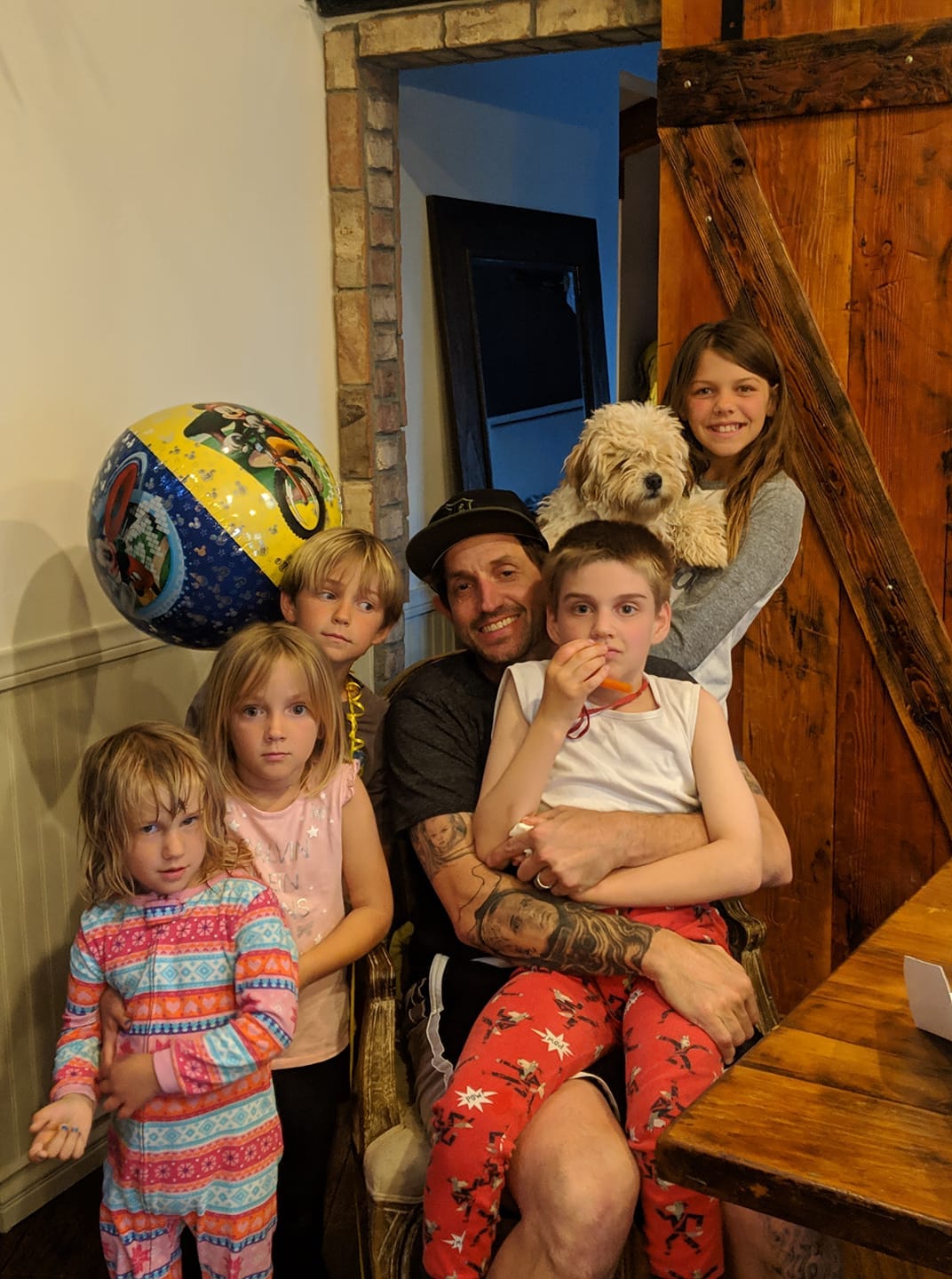
My name is Chad Ratliffe. I’m the single parent to 5 kids within 6 years of age from one another and two with special needs — Rocco and Blu.
I started The Thriving Parent because I needed it to exist, and it didn’t.
So here we are.


We usually think of addiction as something related to substances — alcohol, drugs, food, screens.
But identity functions the exact same way.
Read more...But identity functions the exact same way.
